About Year 2
Lecture: Fridays, 6pm @ Redbud Books
Discussion: Fridays, 6pm @ The Overlook (611 W 12th St.)
All readings are available on our Proton Drive.
Suggested Readings are meant to be engaged with after each lecture and to help support conversation during discussion sections
Our second year provides an opportunity to dive deeper into the ideas and movements explored in the first year, examining historical revolutionary struggles with an emphasis on what the social theories immanent to each revolutionary movement have to teach us about the contemporary situation. We will also explore how the process by which parties to previous struggles arrived at their self-understandings helps us to come to our own understanding of how we will abolish the society we need to abolish. Finally, and most importantly, we will ask ourselves what skills we will need to develop in order to see this adventure through.
Spring
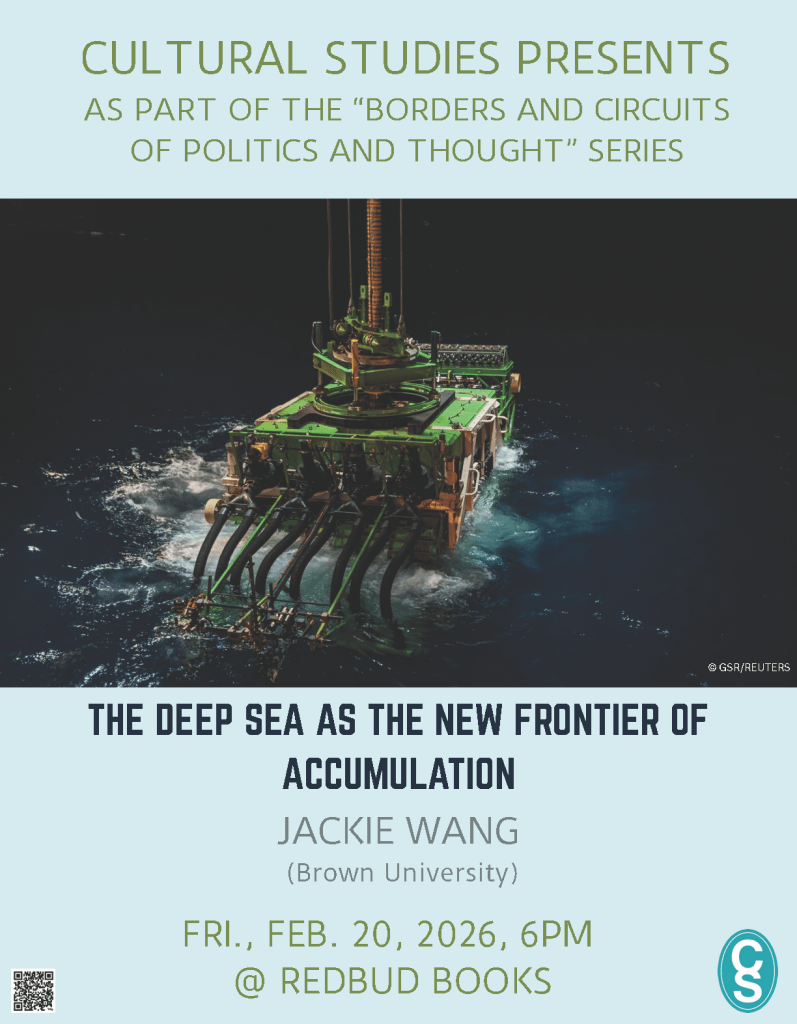
The Deep Sea as the New Frontier of Accumulation
On April 25, 2025, President Donald Trump issued an executive order aimed at jump-starting the deep-sea mining industry by fast-tracking seabed mining permits in an effort to break China’s control over the critical minerals supply chain. Although the US is not a member of the International Seabed Authority (ISA)—the global body that governs the seabed in international waters—the US has forged ahead with their seabed mining plans in the name of national and economic security. Additionally, the “green energy” transition has launched a scramble for minerals such as lithium, cobalt, copper, and nickel, which are essential for electric vehicle batteries. This, along with the US-China conflict over rare earths, has catalyzed interest in deep-sea mining in the Pacific. Yet little is known about how the mining of polymetallic nodules on the seabed of the Pacific’s Clarion Clipperton Zone will affect delicate ocean ecosystems. Drawing on Marxist ecological thought, this lecture will examine the complex interplay between colonial history, indigenous politics, geoeconomics, and environmentalism in the context of deep-sea mining. I will explore the new modes of extraction that have ushered in what I call ‘oceanic primitive accumulation.’
Jackie Wang
Jackie Wang is a poet, scholar, multimedia artist, and Assistant Professor of Literary Arts at Brown University. She is the author of Carceral Capitalism (Semiotext(e), 2018), the poetry collection The Sunflower Cast a Spell to Save Us from the Void (Nightboat Books, 2021; National Book Award Finalist, Lambda Literary Award Finalist), the experimental essay collection Alien Daughters Walk Into the Sun (Semiotext(e), 2023), and The Collected Graces (forthcoming from Nightboat Books). She is also the co-author, with the Precarity Lab, of Technoprecarious (Goldsmiths Press, 2020). She holds a PhD and MA in African and African American Studies from Harvard University and a BA in Liberal Arts from New College of Florida.
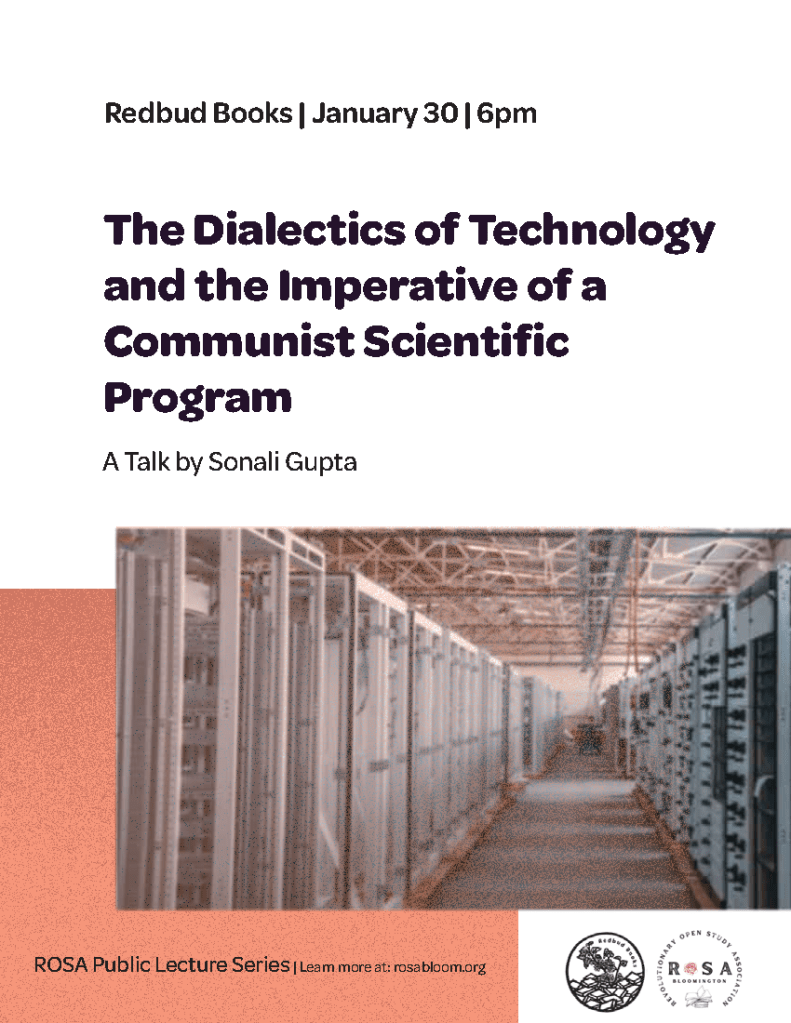
The Dialectics of Technology and the Imperative of a Communist Scientific Program
This presentation offers a dialectical analysis of contemporary technological production, arguing that the catastrophic trajectories of computation, artificial intelligence, biotechnology, and geoengineering cannot be reduced to capitalism alone, but emerge from a dominant techne—a historically contingent mode of world-making that renders technological futures inevitable, singular, and self-authorizing. We will explore how scientific methodologies, metaphors, and regulatory regimes encode political and ontological commitments that reproduce domination even under ostensibly benevolent or anti-capitalist aims. Through a methodological study of recent inflection points in technological development, I argue that transforming property relations is necessary but insufficient to alter technological outcomes unless the productive processes, narratives, and epistemologies of technological production themselves are reconfigured. The paper advances the concept of a communist scientific program—not as centralized expertise or state planning, but as a dialectical, participatory, and materially grounded practice capable of interrupting technological inevitability, preserving collective memory, and cultivating alternative cosmotechnical horizons. By situating technology as a site of struggle coextensive with politics and economics, the paper contends that communism must become a world-building project at the level of science and technics if it is to bifurcate the future and repair the metabolic rift between life, labor, and the planet.
Sonali Gupta
No bio provided.
Fall
AI, Automation, and Heteromation: The Spirit of Platform Capitalism
The history of capitalism as a socio-economic system is one of constant change, dynamism, crisis, restructuring, and reinvention. The current moment in that long history demonstrates many of those same elements, with AI and computing technologies providing key driving mechanisms. How much is capitalism going to be able to reinvent itself this time? Will it pull it off again?
Hamid Ekbia
Hamid R. Ekbia is University Professor at Syracuse University. He studies the social, economic, and cultural aspects of AI and computing, and has (co)authored a number of books on these topics, including Artificial Dreams: The Quest for Non-Biological Intelligence (Cambridge University Press, 2008), Heteromation and Other Stories of Computing and Capitalism(MIT Press, 2017), Big Data Is Not a Monolith (MIT Press, 2016), and Universal Access and Its Asymmetries: The Untold Story of the Last 200 Years (MIT Press 2023).
- “Keynes’s grandchildren and Marx’s gig workers: Why human labour still matters,” Hamid R. Ekbia & Bonnie A. Nardi (International Labour Review, Vol. 158, No. 4)
- “Commodities or collectives? The fight over the future of technology,” Hamid R. Ekbia (Transformative ideas–ensuring a just share of progress for all)
The Communal Hypothesis
Care, mutual aid, and commoning are the political watchwords of our time. Never before have autonomist political forms had a wider sway. But how can we give a material account of the emergence of these forms? How do contemporary forms differ from their historical counterparts? In this session, through close reading and militant investigation of and alongside contemporary movements, we trace the complicated, materialist threads that bind past and present communally-inflected political forms and ask after their conditions of possibility, limits, and possible mechanisms of generalization.
B / The Forrest Collective
The Forrest Collective investigates the conditions of historical possibility for the communal, as a form of life and mechanism of organizing social reproduction.
Recommended Reading
- Rosa Luxemburg, The Accumulation of Capital
- Kristin Ross, The Commune Form
- Raquel Gutiérrez Aguilar, In Defense of Common Life
Further Reading
- Jérôme Baschet, The Zapatista Experience
- Robert Nichols, Theft is Property!: Dispossession and Critical Theory
- Alexander Chayanov, The Theory of Peasant Economy
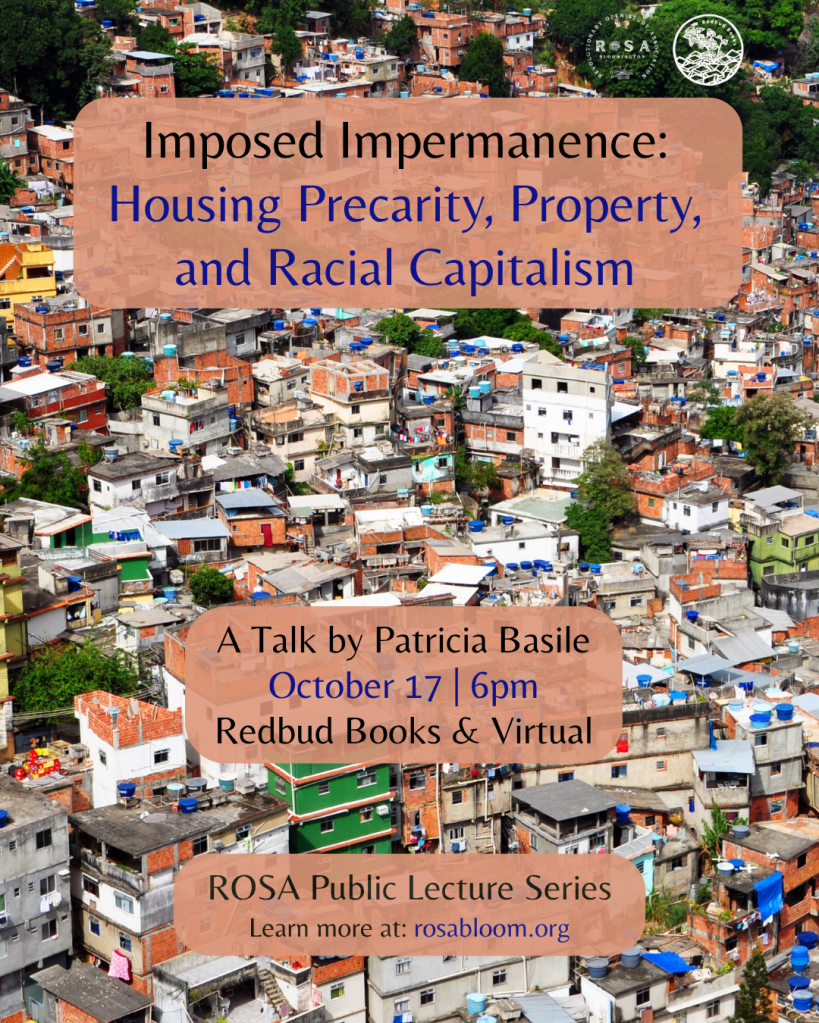
Imposed Impermanence: Housing Precarity, Property, and Racial Capitalism
This talk examines housing precarity as a structural and systemic condition of imposed impermanence. Such conditions are produced and reproduced through property relations under racial capitalism. Drawing from experiences in Brazil and the United States, I analyze how property, often presented as a solution to housing instability, is a relational technology of power that mediates racialized entitlements and privileges as well as deprivation and violence in the production of housing precarity. Finally, I highlight resistance and organizing against housing precarity through collective action, mutual aid, and alternative forms of inhabitation to contest the foundational logics of racial capitalism and produce abolitionist futures.
Patricia Basile
Dr. Patricia Basile is a faculty member in the Department of Geography at Indiana University – Bloomington. As a critical urban geographer, architect, and urbanist, her research focuses on uneven racialized geographies of housing and urbanization. Before moving to the US, Patricia worked for several architectural and urban planning firms, working on projects of social housing and favela upgrading in São Paulo, Brazil.
- Bhandar, B. (2018). Colonial lives of property: Law, land, and racial regimes of ownership. Duke University Press.
- Blomley, N. (2020). Precarious territory: Property law, housing, and the socio‐spatial order. Antipode, 52(1), 36-57.
- Harris, C. I. (1993). Whiteness as property. Harvard Law Review, 1707-1791.
- Roy, A. (2019). Racial banishment. Keywords in radical geography: Antipode at 50, 227-230.
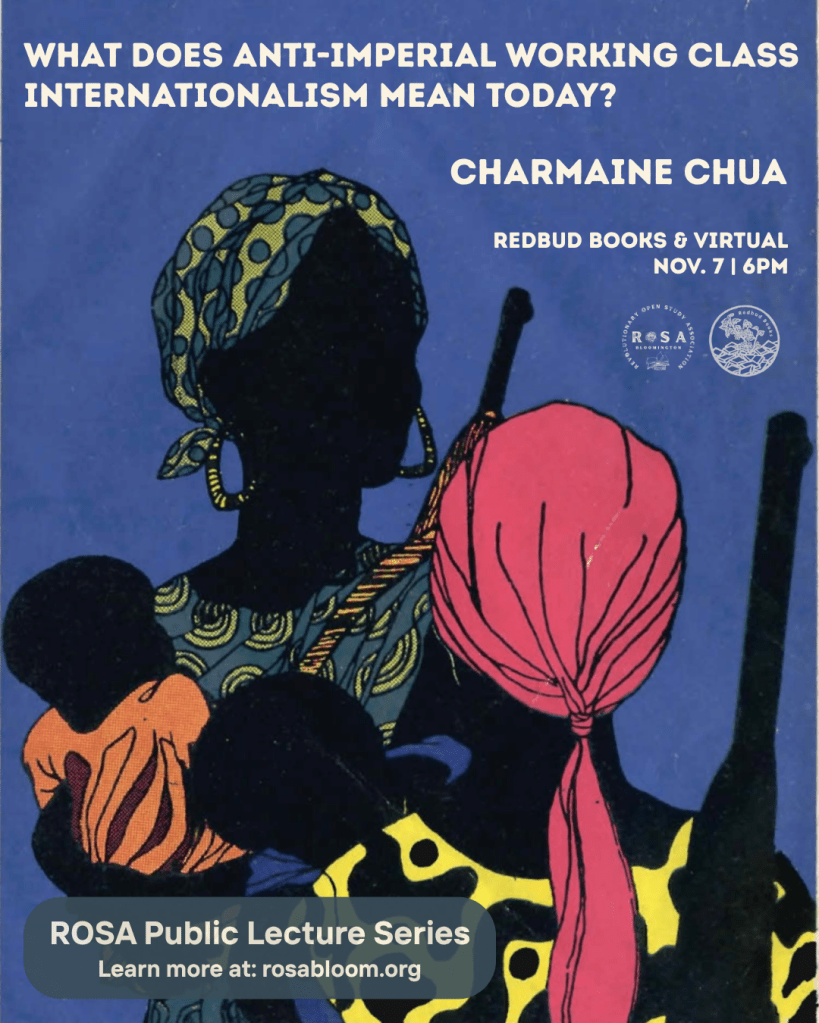
What does anti-imperial working class internationalism mean today?
This talk examines the prospects and challenges facing contemporary anti-imperialist working-class struggle in North America today. Drawing on ten years of scholarship and organizing in and around the logistics sector — through port blockades in the Palestinian solidarity movement and through organizing with independent union of Amazon warehouse workers — this talk suggests that contemporary “internationalist” thinking remains too wedded to immaterial goals of “consciousness-raising” insufficiently attentive to the concrete challenges of rooting internationalism in grassroots working class movements. I re-examine two key concepts: “Internationalism” and “Class” through the work of Lenin and the Italian Autonomists in order to map three methodological orientations to internationalist organizing in the post-industrial imperial core: concretization, (re)composition, and cadrefication. By asking how internationalist struggle has been shaped by political economic transformations in the structure of the transnational production and distribution, I suggest ways in which organizing within and across supply chains has produced core strategies for building working class internationalism in a logistical age.
Charmaine Chua
Charmaine Chua is a Singaporean communist. She is co-founder of the Marxist Institute of Research, teaches in the geography department at UC Berkeley, and organizes with Workers in Palestine and the Communist Caucus of the DSA.
- Charmaine Chua, What does Working Class Internationalism mean today?
- Rodrigo Nunes, It Takes Organizers to Make a Revolution
- Salar Mohandesi, The Specificity of Imperialism
- Ruth Wilson Gilmore, Forward to Lenin, Imperialism and the National Question
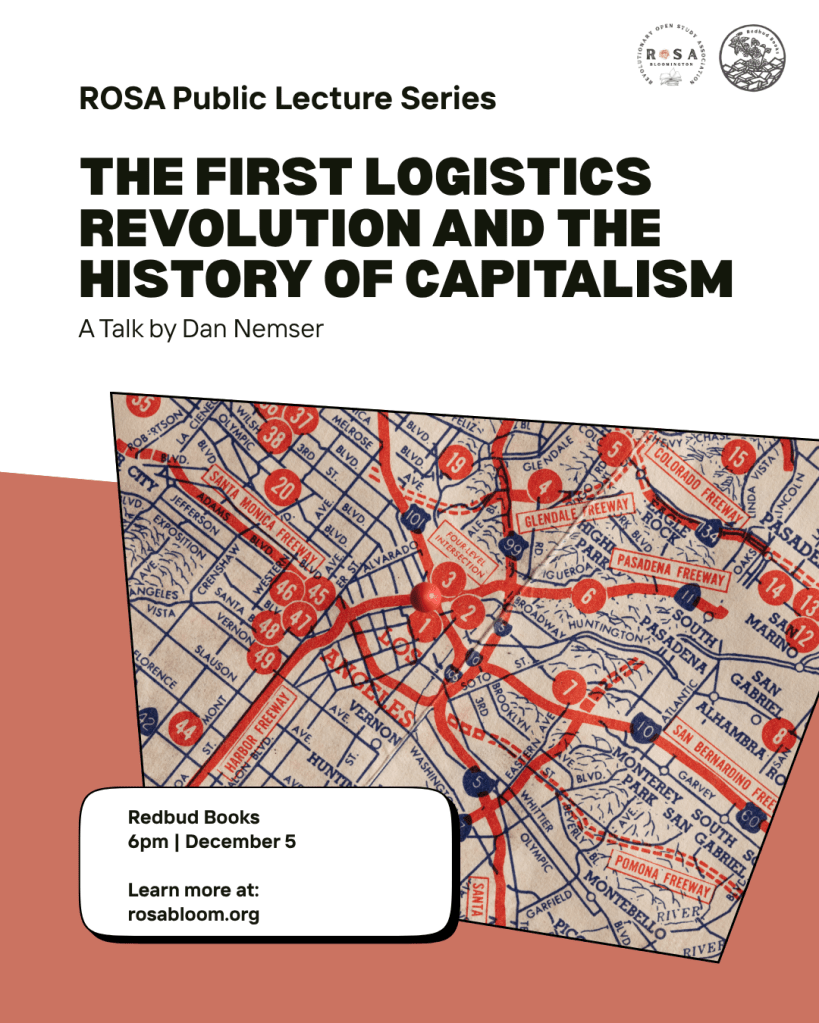
The First Logistics Revolution and the History of Capitalism
Over the last two decades, scholars and organizers have begun to study logistics as a way to understand the structure of contemporary capitalism and to map out a politics to contest it. Much of this work focuses on the period from the 1960s to the present, marked by the so-called “logistics revolution.” This “revolution” helped corporations experiencing the generalized crisis of profitability in the 1960s and 70s to reinvigorate their profits by increasing the speed, cost-efficiency, security, and flexibility of circulation, among other things. In doing so, logistics contributed to the globalization of production, blurred the boundaries between production and distribution, and reorganized national economies into transnational supply chains. Even as critics have focused mostly on this recent history, they have also gestured to, but rarely developed, a set of longer logistics genealogies, including the military revolution and the transatlantic slave trade. In this talk, I present a more substantively historicized and theorized account of the early modern rise of logistics, in dialogue with Marx’s concept of primitive accumulation and Arrighi’s analysis of the long history of capitalism and its systemic cycles of accumulation. I argue that the formation of the capitalist world system in the long sixteenth century is usefully understood as the first logistics revolution.
Dan Nemser
Daniel Nemser is an associate professor of Spanish at the University of Michigan. He is the author of Infrastructures of Race: Concentration and Biopolitics in Colonial Mexico, which won the Latin American Studies Association’s Mexico Humanities Book Award in 2018.
- “Introduction: Turbulent Circulation: Building a Critical Engagement with Logistics,” Charmaine Chua, Martin Danyluk, Deborah Cowen, Laleh Khalili (Society and Space, Vol. 26(4))
- “Fantasy in the Hold,” Stefano Harney & Fred Moten (The Undercommons: Fugitive Planning & Black Study)
 Bloomington